
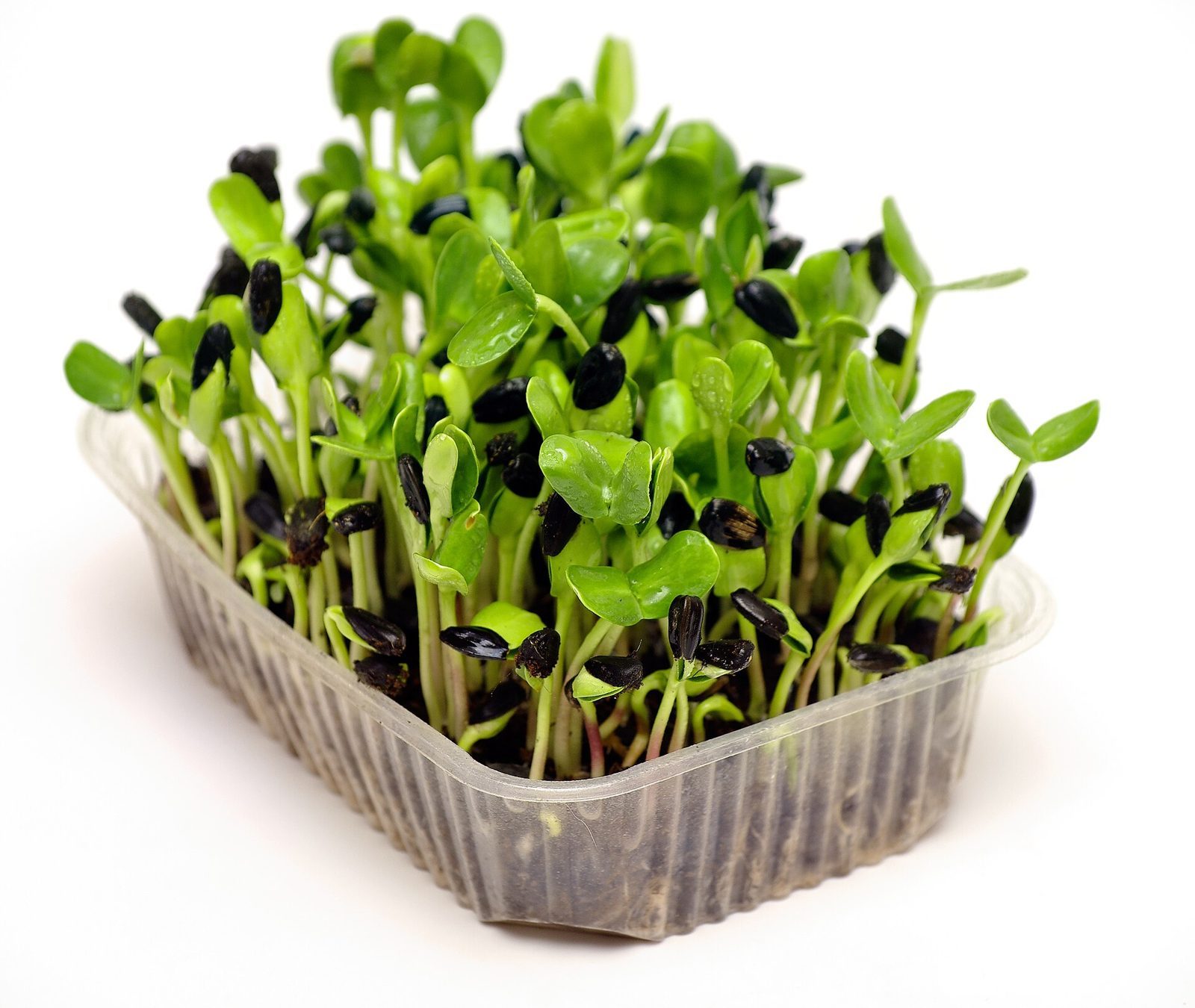
Sunflower microgreens are a crunchy, nutty-sweet tray that reaches harvest in about 9 to 10 days: soak the seed, sow 48 g per 10×20 inch tray, keep it covered for 3 days, then give it light. That is the recipe in Utah State Extension’s chart, and Clemson and Virginia Tech report a similar window. They are a favorite first tray because the flavor is easy to enjoy and the schedule is simple. It is also one of the picks in microgreens for beginners, and the fastest microgreens table shows how it compares on speed. New to the method? How to grow microgreens covers the steps every variety shares.
- Seed per 10×20 tray
- 48 g
- Soak
- 6–12 hours
- Blackout (covered)
- 3 days
- Days to harvest
- 9–10 days
- Harvest at
- 2–3 inches tall, cut early
- Flavor
- Nutty, sweet
- Regrows
- No, start a new tray
Sowing sunflower microgreens
Utah State lists 48 g of seed for a 10×20 inch tray, with a 12-hour presoak. Other extension services agree on soaking large seeds: Maryland says 6 to 12 hours speeds germination for sunflower and a handful of other species, Penn State soaks for about 10 hours, and Oregon State suggests an overnight soak for large seed such as sunflower and peas. The practical routine is to put the seed in a bowl of clean water in the evening, drain it in the morning and sow right away.
Sow thickly and evenly over a moist growing medium. Penn State’s general rule is a denser sowing for microgreens than for crops grown to full size, with lower rates in summer than in winter and for larger seed. The seed calculator scales Utah State’s figure to the tray you have. For the medium, Penn State lists peat-based mixes, coconut coir and fiber mats, and Maryland suggests a lightweight soilless mix. Start with seed sold for microgreens or labeled untreated and a tray washed with soap and water.
Cover and blackout
Sunflower likes a weighted, dark start. Utah State covers the tray for 3 days with a second 1020 tray on top and weights it with something like a piece of plywood so the seed stays in firm contact with the medium; for the second half of the dark period the top tray is turned over to form a cover that does not touch the seeds. Penn State likewise suggests weight on the seeds for pea and sunflower. When the stems are standing, uncover and move to light.
Light and watering
Use a bright window or a grow light. Utah State runs 18 hours of light and 6 of dark; Maryland suggests about 16 hours in total. Maryland recommends 70 to 75°F. Water from below, as Penn State describes, by setting the tray in a shallow tub until the medium is wet and then draining it. A small fan or a cracked window keeps air moving (Maryland, Penn State). The harvest planner gives you a calendar of uncover and cut dates.
Harvest
Utah State lists 9 to 10 days, Virginia Tech 9 to 12 days and Clemson 8 to 12 days. Maryland’s guide for all microgreens is 2 to 3 inches tall, 7 to 21 days after sowing. Purdue adds a flavor tip: sunflower turns bitter the longer it grows, so an early cut keeps the taste at its nutty, sweet best. Cut just above the medium with clean scissors and leave the roots behind (Penn State, Purdue). Seedlings do not regrow after cutting (Maryland, Oregon State), so start a new tray with fresh medium. Penn State reports that storing at 41°F in the dark extends shelf life to 10 to 14 days.
Flavor and color
Utah State lists sunflower as nutty and sweet, and Clemson calls it nutty. The flavor is friendly for people new to microgreens. Pair it with the sweeter pea shoots for a mild salad base, or with spicy radish microgreens for contrast.
How to use sunflower microgreens
- Pile onto avocado toast, burgers or a veggie wrap for crunch.
- Toss with grated carrot and a simple vinaigrette.
- Top a bowl of rice, noodles or roasted vegetables.
- Add by the handful to a sandwich in place of lettuce.
- Serve a small bunch alongside eggs or fish as a garnish.
What’s in it
Vitamin C measured at 67.55 mg per 100 g in a 2024 open-access study of six microgreen species, third highest of the six.
- Vitamin C (ascorbic acid)third of six species
- 67.55 mg
See microgreens nutrition for how these figures fit the wider USDA studies.
Plan your tray
Plan your harvest
Frequently asked questions
How long do sunflower microgreens take to grow?
Utah State lists 9 to 10 days, Virginia Tech lists 9 to 12 days and Clemson lists 8 to 12 days. Start checking the tray around day 8 or 9.
How long should I soak sunflower seeds?
Utah State soaks for 12 hours, Penn State for about 10 hours, Maryland says 6 to 12 hours and Oregon State says overnight. Any time in that window works, followed by a draining and an immediate sowing.
How much seed does a sunflower tray need?
Utah State uses 48 g of seed for a standard 10×20 inch tray. The seed calculator on this site scales that to other sizes.
Why put weight on sunflower seeds?
Penn State recommends weight on the seeds during germination for pea and sunflower. Utah State does it with a second tray and a piece of plywood, which keeps the seed in contact with the medium.
When is the best time to cut sunflower microgreens?
Purdue notes that sunflower turns bitter the longer it grows, so cut on the early side, as soon as the tray reaches the 2 to 3 inch size Maryland describes, to keep the nutty, sweet flavor.
Sources
- Grow Your Own Microgreens, Utah State University Extension
- Growing Microgreens and Baby Greens Indoors, University of Maryland Extension
- A Step-by-Step Guide for Growing Microgreens at Home, Penn State Extension
- Growing Microgreens, Penn State Extension
- Grow Microgreens at Home, Purdue Extension
- Growing Microgreens, Clemson Cooperative Extension, Home and Garden Information Center
- Microgreen Production (SPES-756), Virginia Tech Cooperative Extension
- Microgreens, Oregon State University Extension
- Nutrient composition of six microgreen species (open-access study, 2024), PubMed Central
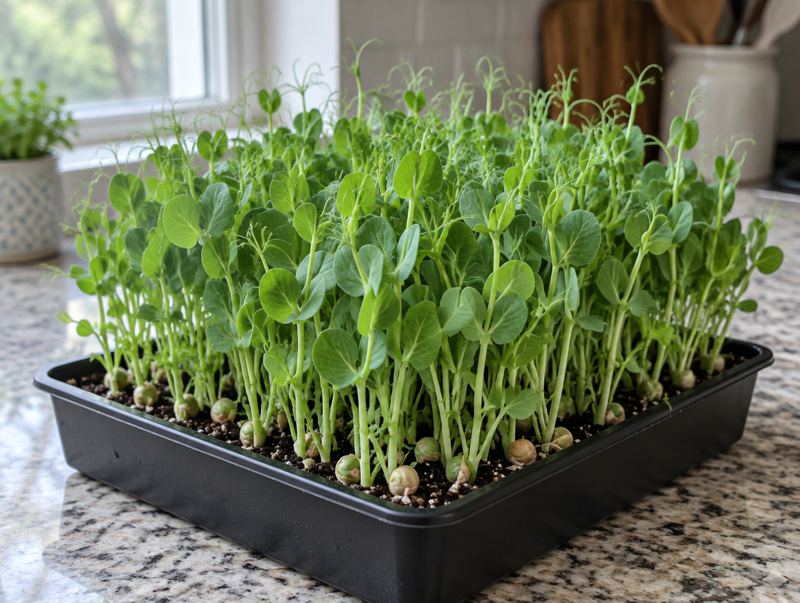 Pea Shoots
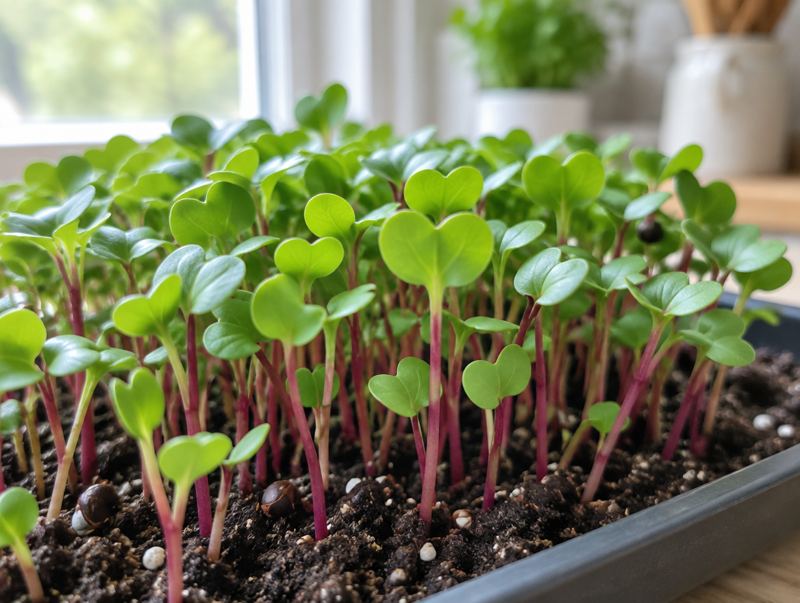 Radish
 Broccoli