
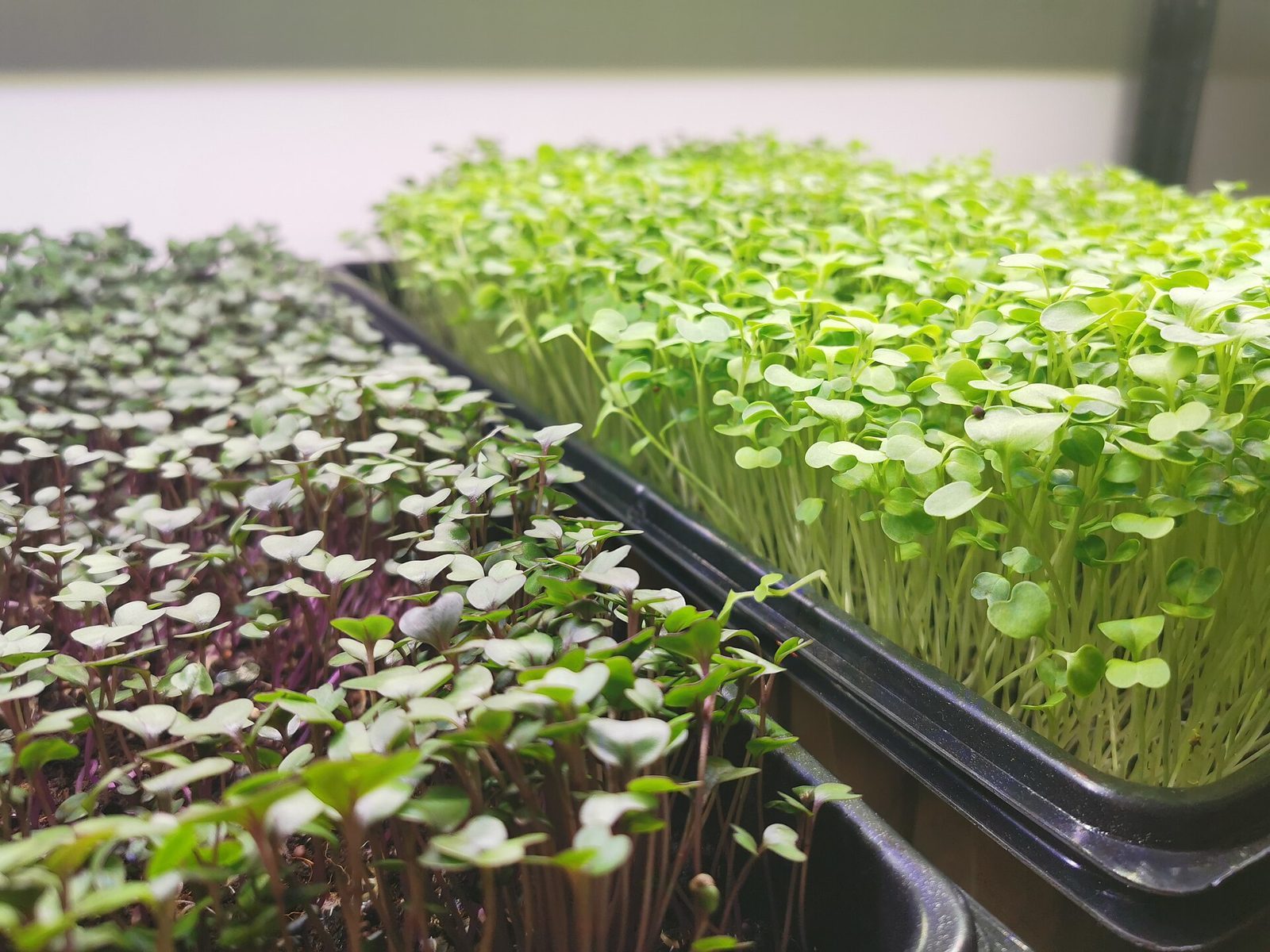
Broccoli microgreens are an easy, mild-tasting tray that is ready in about 8 to 12 days: sow 28 g of seed per 10×20 inch tray, skip the soak, keep it covered for 2 to 4 days, then give it light. Utah State Extension’s seeding chart lists exactly that recipe, and Clemson and Virginia Tech report harvests in a similar window. Broccoli is also one of six microgreen species with measured nutrient amounts in a 2024 open-access study, which you can see below. It is also one of the picks in microgreens for beginners, and the fastest microgreens table shows how it compares on speed. New to the method? How to grow microgreens covers the steps every variety shares.
- Seed per 10×20 tray
- 28 g
- Soak
- No soak needed
- Blackout (covered)
- 2–4 days
- Germination
- About 36 hours at 72°F (cabbage family)
- Days to harvest
- 8–12 days
- Harvest at
- 2–3 inches tall, first true leaves forming
- Flavor
- Mild broccoli
- Regrows
- No, start a new tray
Sowing broccoli microgreens
Utah State’s chart lists 28 g of broccoli seed for a 10×20 inch tray, with no presoak. Spread the seed in a thick, even layer over a pre-moistened medium; Penn State and Maryland both advise sowing microgreens more densely than a crop you plan to grow to full size, because the seedlings are harvested young. If you have a different tray size, the seed calculator turns the 28 g figure into the right amount.
For the medium, Penn State names peat-based mixes, coconut coir and fiber mats as the common choices. Virginia Tech specifically lists hemp and burlap grow mats for broccoli. Mats are a tidy option for a windowsill setup, and Maryland points out that mat-grown greens harvest cleaner than those from potting soil. Begin clean: pick seed sold for microgreens or marked untreated (Clemson and Penn State), wash the tray with soap and water, and use fresh, clean water for each watering.
Cover and blackout
Utah State keeps broccoli covered for 2 to 4 days. The cabbage family is quick to wake up: Maryland reports germination in about 36 hours at 72°F, so the tray is busy even in the dark. Use a second tray on top, or a clear lid or plastic cover that traps warmth and moisture as Clemson and Maryland describe. When the stems are standing and the cotyledons are open, move the tray to the light.
Light, water and air
A bright window or a simple grow light is enough. Utah State runs lights for 18 hours and dark for 6, while Maryland recommends about 16 hours of total light a day. Aim for 70 to 75°F (Maryland), and keep the tray away from heating vents and drafts (Purdue says 68 to 72°F).
Bottom watering keeps the leaves dry: set the tray in a little water until the medium is damp, then lift it out to drain (Penn State). A spray bottle works too, as Clemson and Oregon State describe. A gentle fan or an open window now and then keeps air moving around a dense tray, which Maryland and Penn State both recommend.
Harvest
Utah State lists 8 to 12 days, Clemson 8 to 10 days and Virginia Tech 8 to 13 days. Maryland’s general guide for microgreens is 2 to 3 inches tall, 7 to 21 days after sowing, and Purdue and Utah State say to cut when the first true leaves appear. Use clean, sharp scissors and cut just above the medium, leaving the roots behind (Penn State). Microgreens do not regrow after cutting (Maryland, Oregon State), so plan a fresh tray with fresh medium for the next round, and sow a new one every few days for a steady supply. Use the harvest planner to put dates on the calendar.
Cold, dark storage keeps the harvest crisp: Penn State reports 10 to 14 days at 41°F, compared with 2 to 4 days in ambient conditions.
Flavor and color
Utah State and Clemson both list broccoli’s flavor as mild. Virginia Tech’s summary of flavor research describes brassica microgreens as more neutral than peppery arugula, so broccoli sits in the gentle part of the brassica range. That makes it a good gateway to the spicier members of the family, such as radish with its nutty, spicy bite, or kale with its stronger brassica character.
How to use broccoli microgreens
- Scatter over scrambled eggs, a grain bowl or a bowl of soup just before serving.
- Layer into sandwiches and wraps in place of lettuce.
- Blend a handful into a green sauce or pesto for pasta.
- Toss with a little lemon juice and olive oil for a quick side salad.
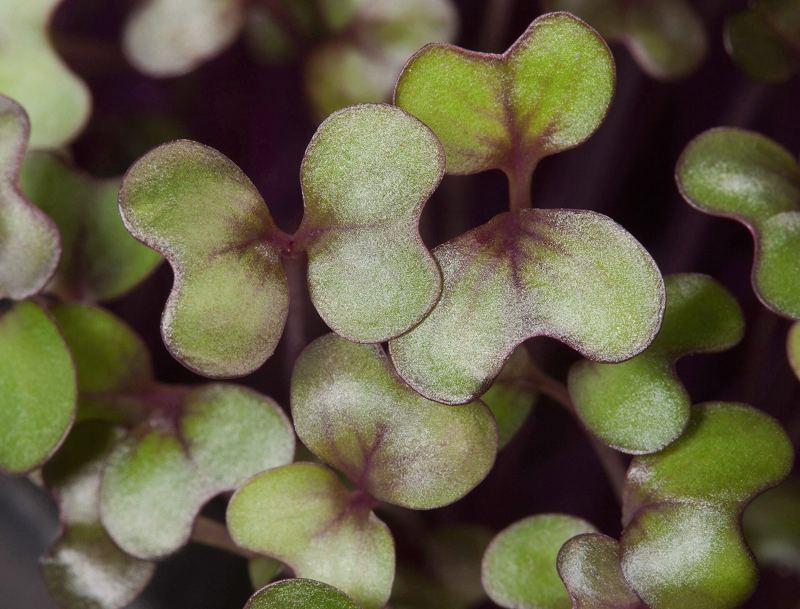
- Pair with red cabbage microgreens for a two-color tray on the table.
What’s in it
Highest magnesium, iron and manganese of the six microgreen species in a 2024 open-access study.
- Vitamin C (ascorbic acid)
- 49.02 mg
- Magnesiumhighest of six
- 86.83 mg
- Ironhighest of six
- 2,610.42 µg
- Manganesehighest of six
- 350.56 µg
See microgreens nutrition for how these figures fit the wider USDA studies.
Plan your tray
Plan your harvest
Frequently asked questions
How long do broccoli microgreens take to grow?
Utah State lists 8 to 12 days, Clemson lists 8 to 10 days and Virginia Tech lists 8 to 13 days. The three ranges overlap at 8 to 10 days, which is the window to start checking your tray.
Do broccoli seeds need soaking?
No. Utah State's chart marks broccoli as a no-soak seed, so you can sow it dry straight onto the moist medium.
How much broccoli seed goes in a tray?
Utah State uses 28 g of seed for a standard 10×20 inch tray. The seed calculator on this site scales that figure to other tray sizes.
Can I grow broccoli microgreens on a mat instead of soil?
Yes. Virginia Tech lists hemp and burlap grow mats as media used for broccoli microgreens, and Penn State lists coconut coir and fiber mats among the common choices. Maryland adds that harvests from seeding mats come out cleaner than those from potting soil.
What does broccoli microgreen taste like?
Utah State and Clemson both describe it as mild, so it is an easy first brassica to try on salads and sandwiches.
Sources
- Grow Your Own Microgreens, Utah State University Extension
- Growing Microgreens, Clemson Cooperative Extension, Home and Garden Information Center
- Microgreen Production (SPES-756), Virginia Tech Cooperative Extension
- Growing Microgreens and Baby Greens Indoors, University of Maryland Extension
- A Step-by-Step Guide for Growing Microgreens at Home, Penn State Extension
- Growing Microgreens, Penn State Extension
- Nutrient composition of six microgreen species (open-access study, 2024), PubMed Central
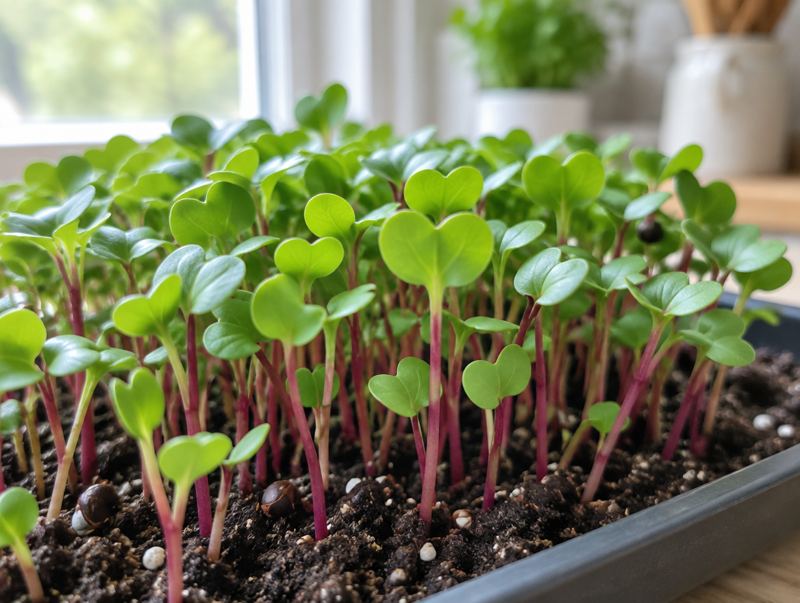 Radish
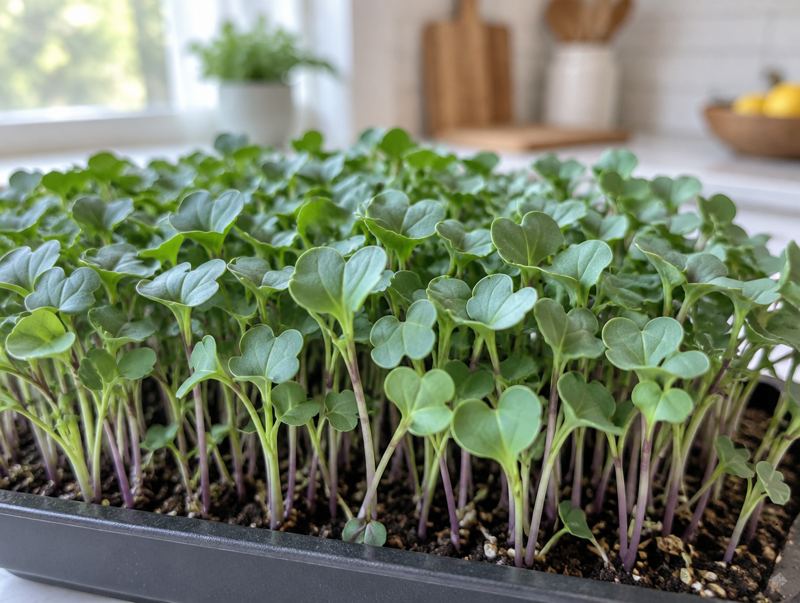 Kale
 Red Cabbage