
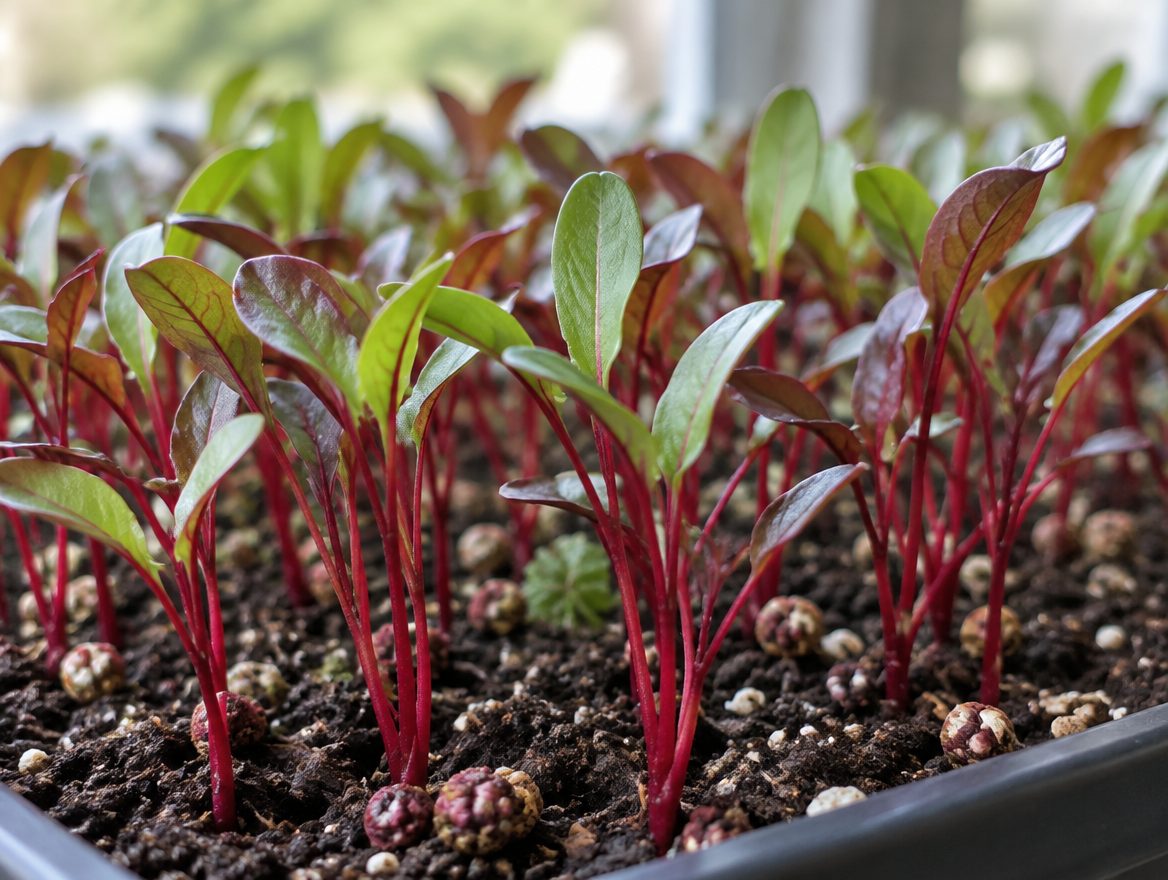
Beet microgreens are an earthy, slightly tangy tray that rewards a little patience: soak the seed for 6 to 12 hours, sow it thickly, keep the tray covered until the sprouts are up, and cut in roughly 11 to 21 days. Clemson Extension lists 11 to 21 days, Virginia Tech 12 to 23 days and Mississippi State 16 to 25 days, which makes beets one of the slower trays and a good one to start early in your weekly plan. It is a good next step after the microgreens for beginners, and the fastest microgreens table shows how its timing compares. New to the method? How to grow microgreens covers the steps every variety shares.
- Soak
- 6–12 hours
- Days to harvest
- 11–21 days
- Harvest at
- 2–3 inches tall, first true leaves forming
- Flavor
- Earthy, with a sour note
- Regrows
- No, start a new tray
Sowing beet microgreens
Beet seed is one of the varieties that Maryland Extension names for soaking: a 6 to 12 hour soak in water speeds germination for beet, pea, sunflower, chard, cilantro and a few others. Drain the seed and sow it right away, thickly and evenly, over a pre-moistened medium. Penn State’s general rule is a denser sowing than for a full-size crop, with lower rates in summer than in winter and for larger seed than smaller seed.
Penn State lists peat-based mixes, coconut coir and fiber mats as the common media, and Virginia Tech specifically names hemp and burlap grow mats for beet microgreens. Maryland adds that harvests from seeding mats come out cleaner than those from potting soil. Begin clean with seed sold for microgreens or marked untreated (Clemson), a tray washed with soap and water, and clean water for soaking and rinsing. For a starting rate, check the seed packet and the seed calculator for varieties with a sourced rate.
Cover and blackout
Start the tray under a cover that traps warmth and humidity, such as a second tray, a clear lid or plastic (Clemson, Maryland). Penn State suggests keeping seeds in the dark for a few days to help germination. Vent any cover now and then, as Maryland advises, so extra moisture does not build up. When the sprouts are standing, move the tray to the light. Because beets are slow, look in on the tray every couple of days rather than expecting a quick change.
Light and watering
A bright window or a grow light is enough. Utah State’s chart for other varieties runs 18 hours of light and 6 hours of dark, and Maryland suggests about 16 hours in total. Maryland recommends 70 to 75°F, and Purdue suggests 68 to 72°F away from heating vents and drafts. Water from below by placing the tray in a shallow tub until the medium is wet, then drain it (Penn State), and keep a gentle fan or an open window nearby for airflow (Maryland, Penn State). The harvest planner turns your sow date into a harvest window.
Harvest
Clemson lists beets at 11 to 21 days, Virginia Tech at 12 to 23 days and Mississippi State at 16 to 25 days, grouped with cilantro, basil, red amaranth, carrots and chard. Maryland’s general size guide is 2 to 3 inches tall, 7 to 21 days after sowing, and Purdue and Utah State say to cut when the first true leaves show. Cut just above the medium with clean, sharp scissors and leave the roots (Penn State). Seedlings do not regrow after cutting (Maryland, Oregon State), so the next tray gets fresh medium.
Because the cycle is long, a staggered schedule works well. Oregon State suggests succession planting, starting just enough for the household and sowing more every few days. Store the harvest in a clean plastic bag in the refrigerator (Clemson). Penn State reports that dark storage at 41°F extends shelf life to 10 to 14 days.
Flavor and color
Clemson lists beet microgreens as earthy, and Virginia Tech’s summary of flavor research describes beets as sour, in contrast with peppery arugula and the more neutral brassicas. That earthy, tangy character pairs well with creamy and sweet partners such as goat cheese, citrus or roasted squash. If you want to compare slow, flavorful trays, grow it alongside cilantro or basil.
How to use beet microgreens
- Scatter over a goat cheese salad with orange segments.
- Top roasted vegetables or a grain bowl.
- Layer onto sandwiches, tartines and open toasts.
- Add to soup, especially a cold summer soup, at the last moment.
- Garnish a plate of eggs, salmon or a creamy dip.
What’s in it
Red beet microgreens measured 32.72 mg of vitamin C per 100 g fresh weight in a 2024 open-access study of six microgreen species.
- Vitamin C (ascorbic acid)red beet, six-species study
- 32.72 mg
See microgreens nutrition for how these figures fit the wider USDA studies.
Plan your tray
Plan your harvest
Frequently asked questions
How long do beet microgreens take to grow?
Clemson lists 11 to 21 days, Virginia Tech 12 to 23 days and Mississippi State 16 to 25 days. Beets are one of the slower varieties, so start checking the tray from around day 11.
Should beet seed be soaked?
Yes, soaking helps. Maryland says 6 to 12 hours in water speeds germination for beet, along with pea, sunflower, chard and a few other seeds.
What do beet microgreens taste like?
Clemson lists the flavor as earthy, and Virginia Tech's summary of flavor research describes beets as sour, so expect a tangy, earthy green.
Can I grow beet microgreens on a mat?
Yes. Virginia Tech lists hemp and burlap grow mats for beet microgreens, and Penn State names coconut coir and fiber mats among the common media.
Will beet microgreens regrow after cutting?
Maryland and Oregon State both say microgreen seedlings do not regrow after cutting, so start a fresh tray in fresh growing medium.
Sources
- Growing Microgreens, Clemson Cooperative Extension, Home and Garden Information Center
- Microgreen Production (SPES-756), Virginia Tech Cooperative Extension
- Growing Microgreens for the Mississippi Gardener, Mississippi State University Extension
- Growing Microgreens and Baby Greens Indoors, University of Maryland Extension
- A Step-by-Step Guide for Growing Microgreens at Home, Penn State Extension
- Growing Microgreens, Penn State Extension
- Grow Microgreens at Home, Purdue Extension
- Nutrient composition of six microgreen species (open-access study, 2024), PubMed Central
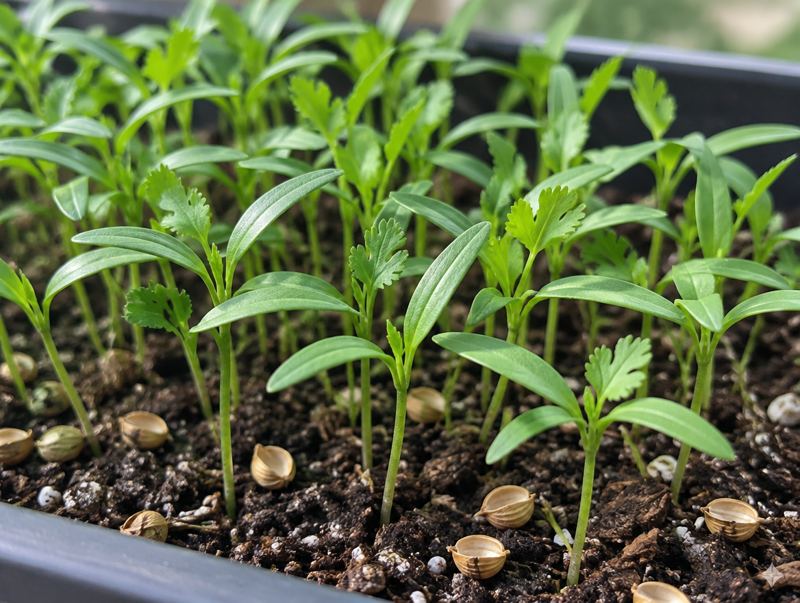 Cilantro
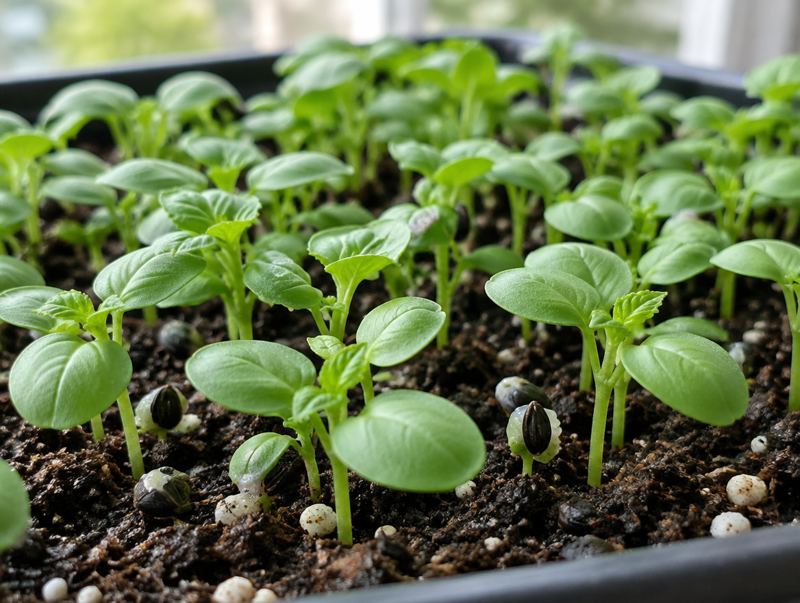 Basil
 Sunflower