
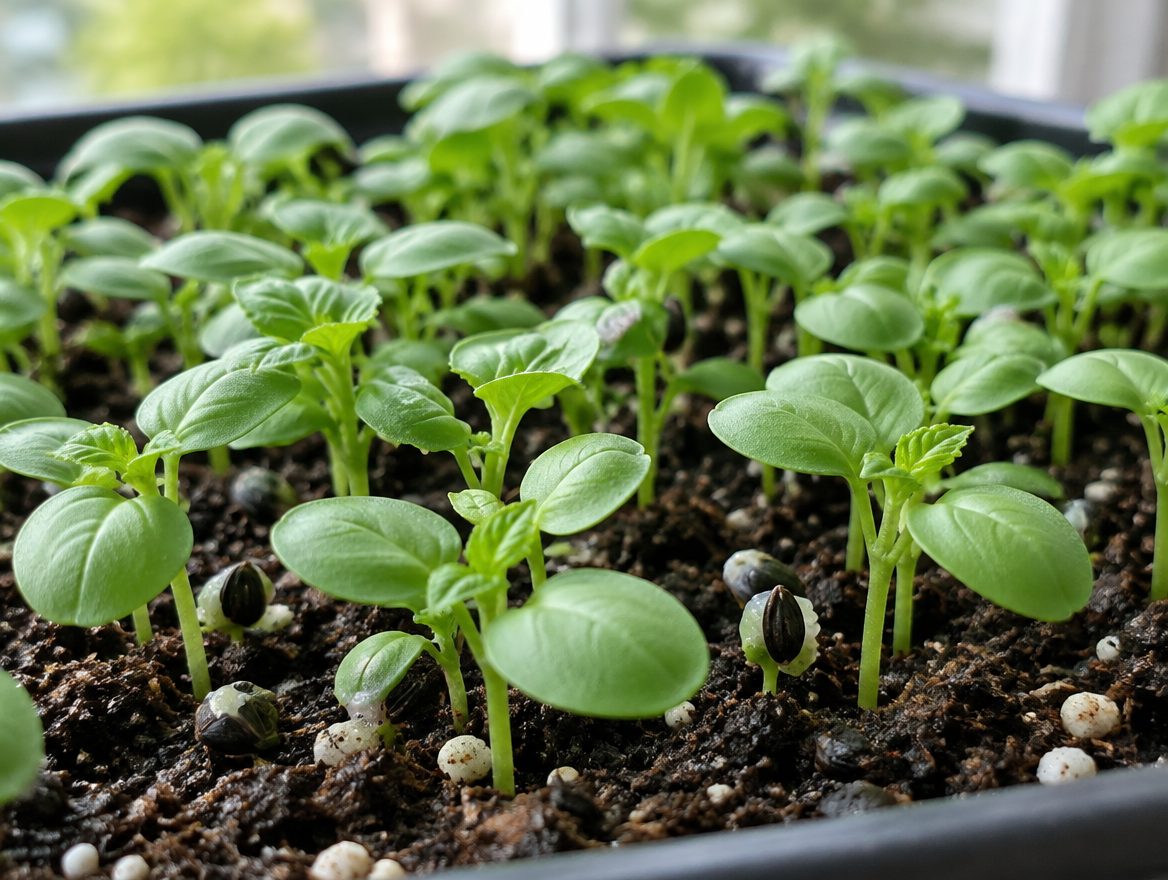
Basil microgreens bring a big, true basil flavor to a tiny leaf: sow 28 g of seed per 10×20 inch tray, skip the soak, keep it covered for 4 to 7 days, and cut in about 12 to 16 days. That is the schedule in Utah State Extension’s chart, with other extension sources giving ranges from 8 to 25 days. Basil rewards a little patience, and a small tray goes a long way in the kitchen. It is a good next step after the microgreens for beginners, and the fastest microgreens table shows how its timing compares. New to the method? How to grow microgreens covers the steps every variety shares.
- Seed per 10×20 tray
- 28 g
- Soak
- No soak needed
- Blackout (covered)
- 4–7 days
- Days to harvest
- 12–16 days
- Harvest at
- 2–3 inches tall, first true leaves forming
- Flavor
- Intense basil
- Regrows
- No, start a new tray
Sowing basil microgreens
Utah State lists 28 g of seed for a standard 10×20 inch tray and marks basil as a no-soak seed. Sow thickly and evenly over a moistened medium (Penn State, Maryland). If you work with a smaller tray, the seed calculator scales the figure. For a growing medium, Penn State lists peat-based mixes, coconut coir and fiber mats, and Maryland points to a lightweight soilless mix. As with every tray, start clean with seed sold for microgreens or marked untreated (Clemson), a tray washed with soap and water, and fresh water.
Maryland describes basil as slow-growing, and that is the main thing to plan around. The extra days are worth it for the aroma.
Cover and blackout
Basil sits at the long end of Utah State’s covered-time column, 4 to 7 days. Keep the tray under a cover that traps warmth and moisture, as Clemson and Maryland describe, and look in every couple of days. Lift the cover when the sprouts are standing and the tray is ready for light. A steady, warm spot helps: Maryland recommends 70 to 75°F, and Purdue suggests 68 to 72°F away from heating vents and window drafts.
Light and watering
Utah State runs lights for 18 hours and dark for 6; Maryland suggests about 16 hours of total light each day. Bottom watering keeps the delicate leaves dry: set the tray in a shallow tub until the medium is wet and then drain it (Penn State). Water only as needed and let excess drain, since Penn State notes this avoids mold. A gentle fan or an open window keeps air moving over the tray (Maryland, Penn State). The harvest planner gives you a calendar from your sow date.
Harvest
Clemson lists basil at 8 to 12 days, Utah State at 12 to 16 days and Mississippi State at 16 to 25 days, grouped with beets, cilantro and other slower crops. Maryland’s general size guide is 2 to 3 inches tall, 7 to 21 days after sowing, and Purdue and Utah State say to cut when the first true leaves show. Cut just above the medium with clean scissors (Penn State). Microgreens do not regrow after cutting (Maryland, Oregon State), so sow the next tray in fresh medium. Penn State’s grower table lists basil at 164.5 g (0.36 lb) per tray, so one tray gives a generous harvest. For longer keeping, Penn State reports 10 to 14 days when stored at 41°F in the dark.
Flavor and color
Utah State calls the flavor intense basil and Clemson calls it strong basil. It tastes like a concentrated version of the herb, so use it where you would normally reach for fresh basil leaves. If you like the idea of a slow, aromatic tray, try cilantro microgreens next.
How to use basil microgreens
- Scatter over pizza or flatbread as it comes out of the oven.
- Top sliced tomatoes with mozzarella and a handful of basil microgreens.
- Fold into pasta or a grain salad at the last moment.
- Stir into scrambled eggs or an omelet just before serving.
- Blend with olive oil and a little lemon for a quick green sauce.
For more ideas, see how to eat microgreens.
Keep the supply going
Basil is a variety where a rolling schedule pays off. Because the tray takes longer, start the next one while the first is still covered. Oregon State suggests succession planting, starting just enough for the household and sowing more every few days, and notes that seed can be expensive, so small, regular trays make the most of it. Maryland and Oregon State both say a bright window or grow lights let you keep growing all year. After cutting, refill the tray with fresh medium and sow again (Penn State), and keep the harvest in a clean plastic bag in the refrigerator (Clemson). Rinse just before eating.
Plan your tray
Plan your harvest
Frequently asked questions
How long do basil microgreens take to grow?
Extension sources vary: Clemson lists 8 to 12 days, Utah State 12 to 16 days and Mississippi State 16 to 25 days. Basil is one of the slower microgreens, so plan a little extra time and check the tray from around day 8.
How much basil seed goes in a tray?
Utah State lists 28 g of seed per 10×20 inch tray. The seed calculator on this site scales that to any tray size.
Do basil seeds need soaking?
No. Utah State's chart marks basil as a no-soak seed.
How long should I keep basil covered?
Utah State covers basil for 4 to 7 days, longer than the 1 to 2 days used for radish, kale and arugula, so give it a patient start.
What does basil microgreen taste like?
Utah State describes it as an intense basil flavor and Clemson as a strong basil flavor, which makes a small handful go a long way.
Sources
- Grow Your Own Microgreens, Utah State University Extension
- Growing Microgreens, Clemson Cooperative Extension, Home and Garden Information Center
- Growing Microgreens for the Mississippi Gardener, Mississippi State University Extension
- Growing Microgreens and Baby Greens Indoors, University of Maryland Extension
- A Step-by-Step Guide for Growing Microgreens at Home, Penn State Extension
- Growing Microgreens, Penn State Extension
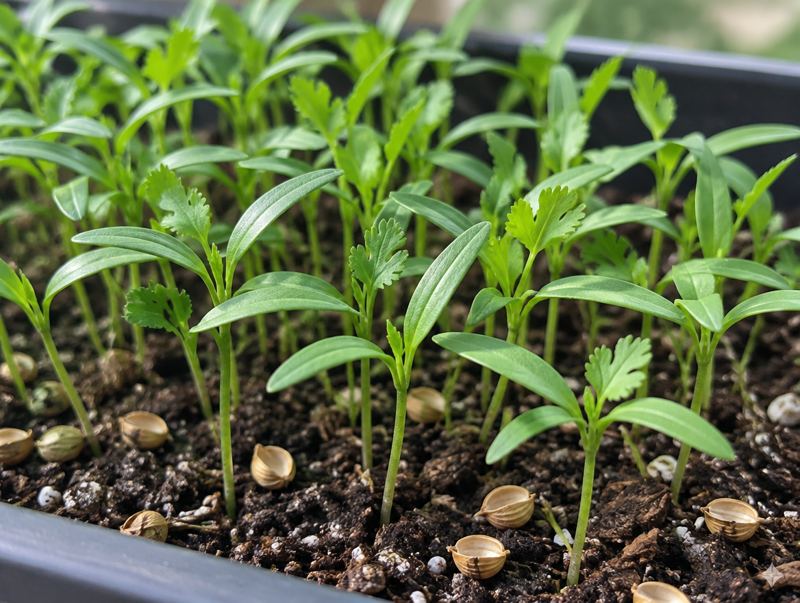 Cilantro
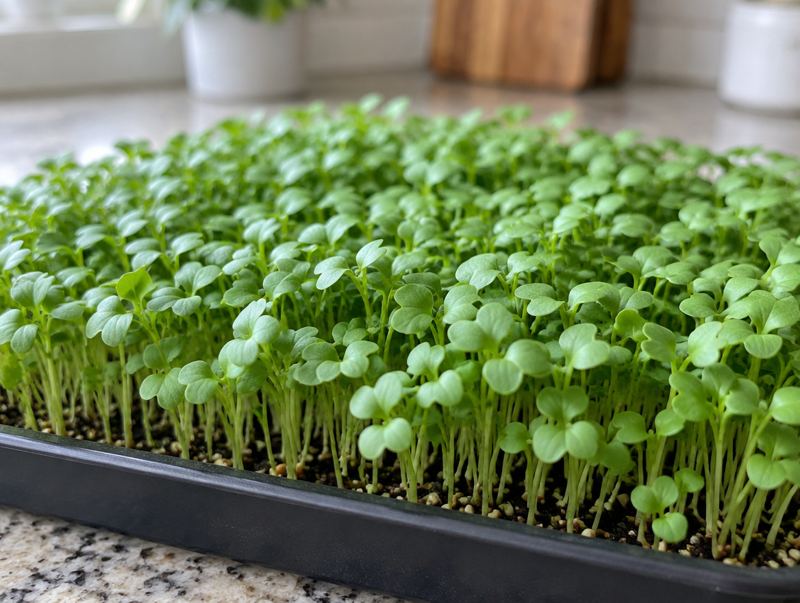 Arugula
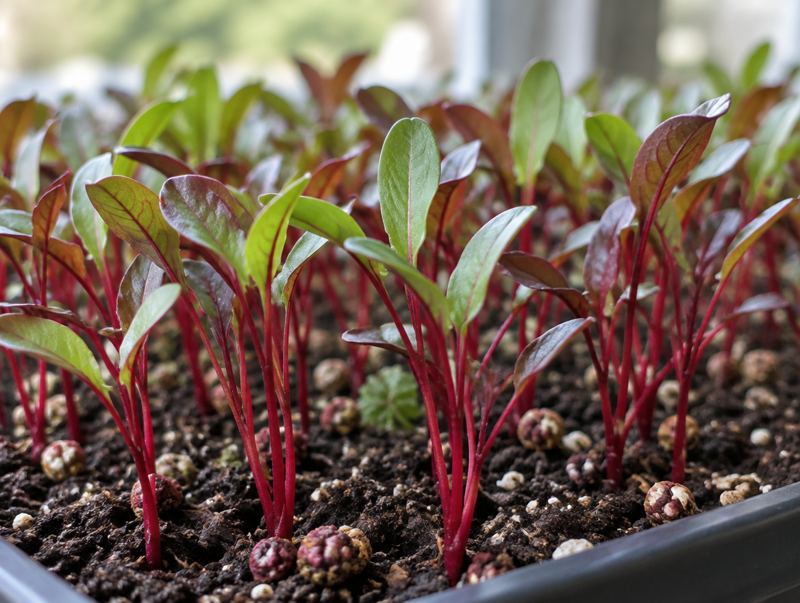 Beet