
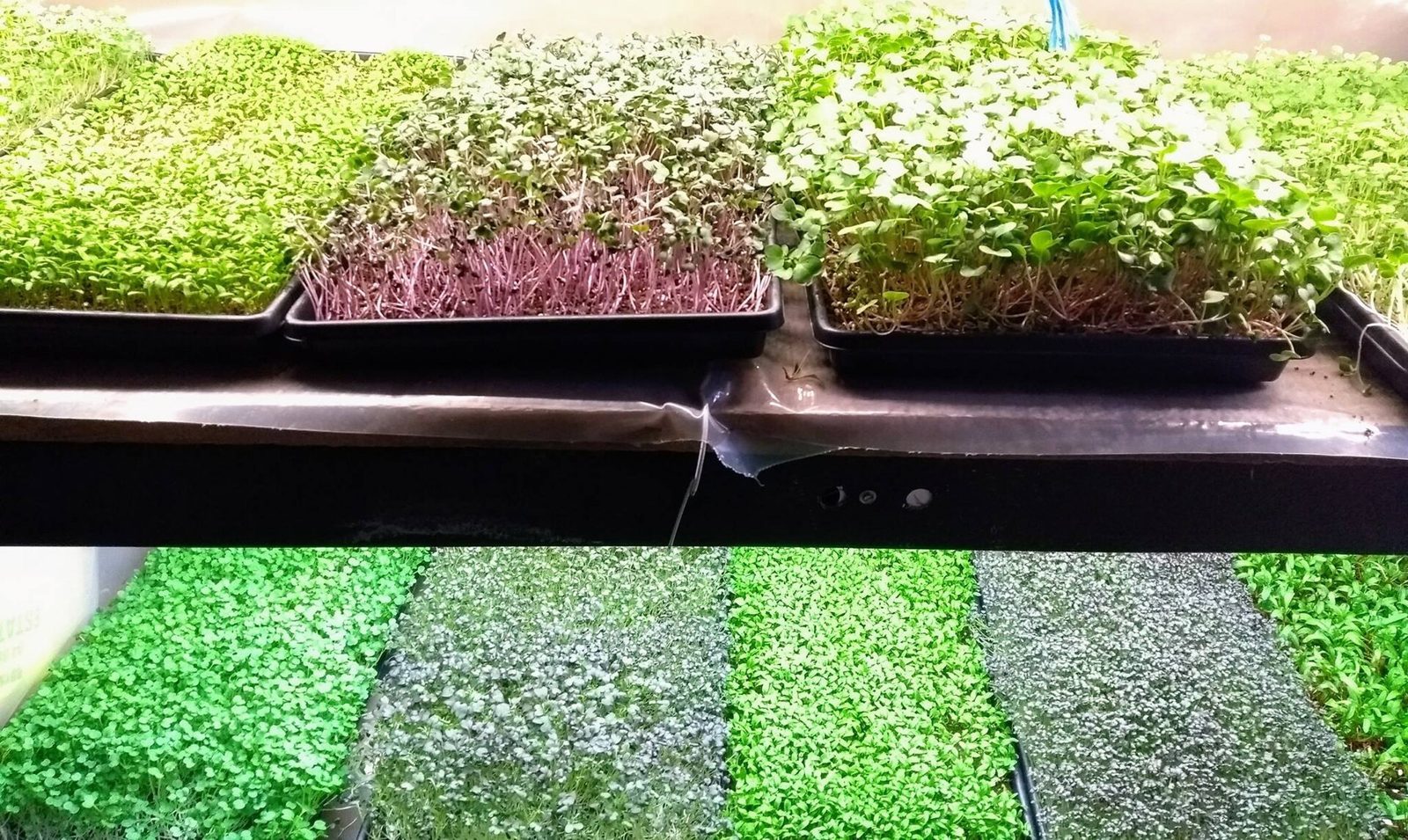
The easiest way to eat microgreens is fresh and raw, as a handful on top of food you are already making: salads, sandwiches, avocado toast, eggs and soups. Each variety brings its own flavor, from sweet pea shoots to peppery arugula and nutty, spicy radish, so you can match the green to the dish. Oregon State Extension calls microgreens big flavor in a small footprint, and a windowsill tray gives you a fresh handful whenever the dish is ready. Serving ideas below are our suggestions, built on the flavors sources describe.
Flavor guide: what each microgreen tastes like
| Microgreen | Flavor | Source |
|---|---|---|
| Pea shoots | Sweet pea | Utah State |
| Broccoli | Mild broccoli | Utah State |
| Sunflower | Nutty, sweet | Utah State |
| Radish | Nutty, spicy | Utah State |
| Kale | Strong brassica, nutty | Utah State |
| Arugula | Peppery | Utah State |
| Mustard | Spicy kick | Oregon State |
| Basil | Intense basil | Utah State |
| Cilantro | Cilantro | Utah State |
| Beet | Earthy | Clemson |
| Nasturtium | Spicy | Clemson |
Mild varieties such as broccoli and pea shoots suit first-time tasters and big handfuls. Spicy and peppery varieties such as radish, mustard and arugula work as a bright accent.
Salads
Use microgreens as the base or as a topping. Our suggestion: pea shoots or sunflower for a sweet, nutty bed, with a pinch of radish or arugula for a spicy lift. Add them on top of a dressed salad and toss lightly. A mix of mild and peppery varieties gives the salad contrast in every bite.
Sandwiches and wraps
Layer a handful of sunflower or pea shoots inside a sandwich for a fresh, crisp texture and a nutty-sweet note. Radish microgreens give a peppery crunch similar to sliced radish on a turkey or egg sandwich. Fold them in right before closing the wrap.
Avocado toast
Mild, creamy avocado pairs well with a spicy topping. Scatter radish, arugula or mustard microgreens over the toast for a peppery finish, or use broccoli for a gentler green. A pinch of salt and a squeeze of lemon complete it.
Eggs
Add pea shoots or arugula to a fried, poached or scrambled egg plate for a fresh green against the warm yolk. Add them after the eggs are plated so they keep their color and crunch.
Soups as garnish
A small pile of microgreens on a bowl of soup adds color and flavor. Cilantro microgreens suit bean or tomato soups, basil microgreens suit tomato soup, and radish adds a peppery bite to a creamy soup. Place them on at the table, since heat softens them quickly.
More simple ideas
- Grain bowls: top rice or quinoa with sunflower or broccoli.
- Tacos: a pinch of cilantro or radish microgreens over the filling.
- Pizza: scatter arugula on a hot slice just before eating.
- Smoothies and juices: pea shoots and sunflower have sweet, nutty flavors that blend easily.
- Cheese boards: use beet or red cabbage microgreens for color.
Harvest, store and serve
Harvest right before you eat for the freshest greens. Purdue and Clemson say to cut above the medium with clean, sharp scissors once the first true leaves show, or at 2 to 4 inches tall for most crops. Microgreens do not regrow after cutting according to Oregon State, so start a new tray every few days to keep the supply steady. The harvest planner can schedule that.
To store them, Penn State reports that dark storage at 41 °F extends shelf life to 10 to 14 days, compared with 2 to 4 days at room conditions. Clemson suggests a clean plastic bag in the refrigerator. Penn State advises washing right before you eat rather than before storage, and a quick rinse in clean water is all they need.
Pick your next tray by flavor
If you like peppery food, sow arugula, ready in 6 to 8 days. If you like sweet and nutty, sow sunflower or pea shoots, both ready in 8 to 10 days. Our fastest microgreens table gives timing for each, and microgreens for beginners suggests a first tray. To see the nutrient amounts measured in these greens, read microgreens nutrition.
Frequently asked questions
How do you eat microgreens?
Eat them fresh and raw: scatter them over salads, sandwiches, avocado toast, eggs and soups, or stir them into a bowl as a leafy topping. Cut above the medium and rinse just before serving.
What do microgreens taste like?
It depends on the variety. Utah State lists pea shoots as sweet pea, broccoli as mild broccoli, sunflower as nutty and sweet, radish as nutty and spicy, arugula as peppery and basil as intense basil. Clemson describes beet as earthy and nasturtium as spicy.
Can you cook microgreens?
Microgreens are mostly served raw, as a topping. For hot dishes, our suggestion is to add them at the end so they stay bright, as a garnish on a soup or a warm plate of eggs.
How do you keep microgreens fresh?
Penn State reports dark storage at 41 °F extends shelf life to 10 to 14 days, against 2 to 4 days at room conditions. Clemson suggests a clean plastic bag in the refrigerator. Wash just before eating.
Sources
- Grow your own microgreens (Utah State University Extension), Utah State University Extension
- Growing microgreens (Clemson Home and Garden Information Center), Clemson Cooperative Extension
- Growing microgreens (Penn State Extension), Penn State Extension
- Microgreens add big flavor in a small footprint (Oregon State Extension), Oregon State Extension
- Grow microgreens at home (Purdue Extension), Purdue Extension