Selling microgreens works because the crop is fast: a tray goes from seed to harvest in about 7 to 21 days, and Penn State Extension names restaurants as the main market, with grocery stores, farmers’ markets and CSA subscriptions also selling microgreens. Start with a few trays a week, learn what your customers want, and add trays as orders grow. This guide covers the sourced basics of a microgreens business: markets, packaging, shelf life and a clean start. For your own growing schedule, use the harvest planner.
Where to sell microgreens
Penn State Extension lists the main outlets:
- Restaurants, the main market.
- Grocery stores.
- Farmers’ markets.
- CSA subscriptions, where members receive a regular box.
Penn State’s advice is to understand your market first. A product that meets consumer preferences starts with knowing who is buying, so ask a chef or a market regular what they would like to see on a plate. Then choose the varieties, tray counts and packaging to match.
Pick varieties that suit a weekly cycle
A fast crop lets you plan a weekly harvest. Utah State’s table gives these harvest times: arugula 6 to 8 days, pea shoots 8 to 10, sunflower 9 to 10, and broccoli, radish and kale 8 to 12. See our fastest microgreens table for the full list. Flavor also sells: sweet pea shoots, nutty and sweet sunflower, peppery arugula and nutty, spicy radish give a small menu of distinct tastes.
Oregon State Extension recommends succession planting, starting enough for your orders and sowing more every few days. That gives you a steady supply instead of one big harvest.
Yield per tray
Penn State publishes a yield table in grams per tray. Examples: arugula 147.6 g, basil 164.5 g, red cabbage 106.1 g, Red Rain mustard 201 g and cilantro 46.8 g. Yield varies by variety, so weigh your own harvests to learn what each tray gives you.
Packaging microgreens
Penn State describes two routes:
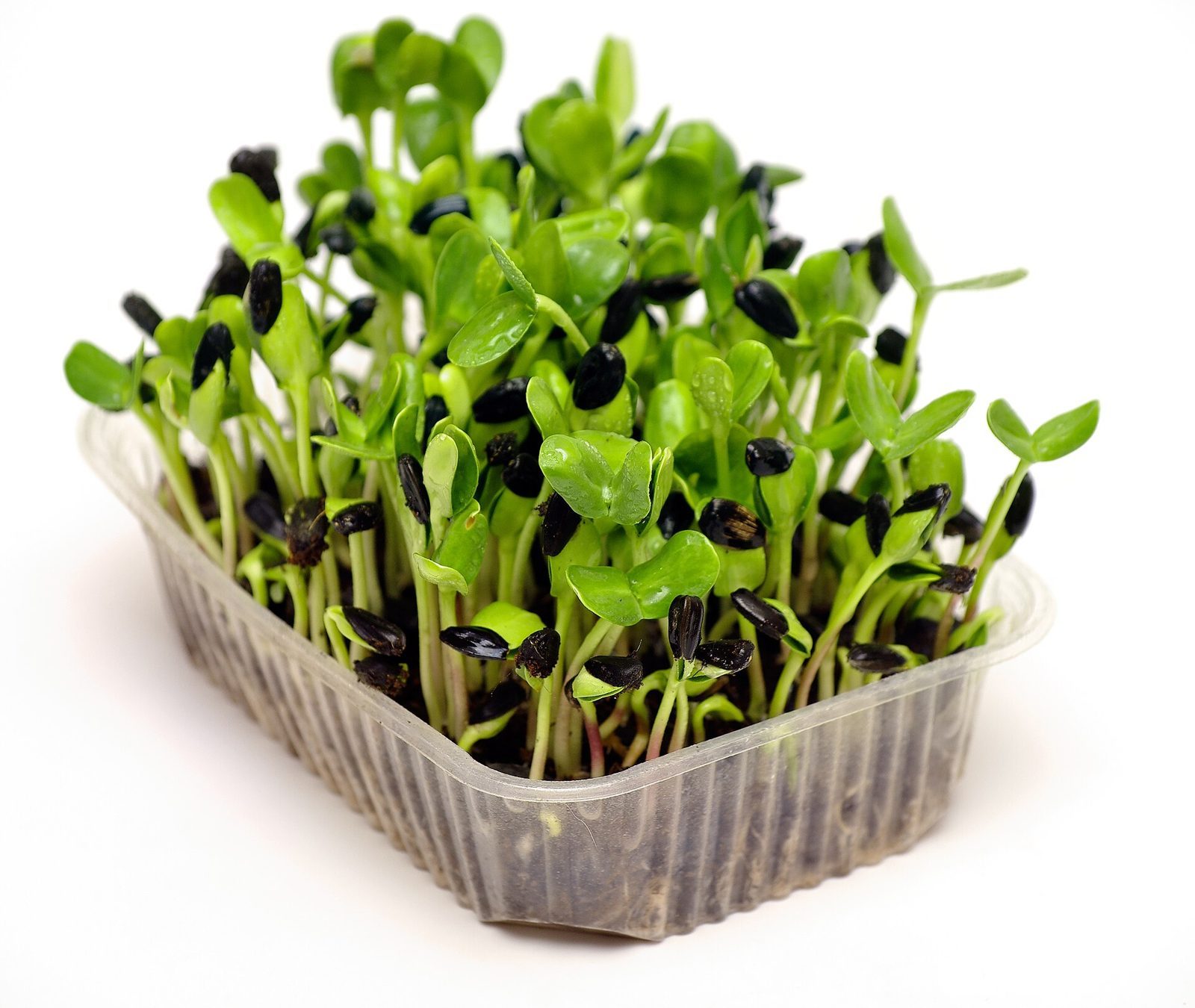
- Clamshells. Cut, pack and sell in a clear container.
- Seeding trays. Sell the living tray, which eliminates harvest costs. The customer cuts what they need.
Choose the route that matches your customers. Chefs may like a living tray they can cut to order, and a farmers’ market shopper may like a ready-to-eat clamshell.
Harvest and shelf life
Good handling gives you more days to sell. Penn State’s farmer reports and storage guidance say:
- Cut with scissors. Scissors give longer post-harvest life than clippers and knives.
- Cut at the right stage. Harvest when the first true leaves show, or at 2 to 4 inches tall for most crops (Utah State, Purdue).
- Do not wash before selling. Washing decreases post-harvest life, so tell customers to wash before eating.
- Chill quickly. Dark storage at 41 °F extends shelf life to 10 to 14 days, compared with 2 to 4 days at room conditions.
- Go to market right after harvest when you can.
Clemson Extension adds a simple method for smaller amounts: store them in a clean plastic bag in the refrigerator.
Start clean, sell with confidence
Customers choose growers they trust, and Penn State’s food safety guidance gives good-practice steps:
- Use seed labeled for microgreens, untreated or organic, and store it dry, sealed and dated.
- Use clean, food-suitable trays, and clean and sanitize trays and tools on a schedule.
- Use E. coli-free water for soaking seed, irrigation and post-harvest washing.
- Use fresh growing medium for each production cycle.
These steps cost little and sit alongside the growing method itself. Together they sit alongside the growing method and give customers a clean, fresh product.
Plan your first selling month
- Week 1: sow two or three quick varieties and weigh each tray at harvest.
- Week 2: offer samples to a nearby chef or a market stall, and note which flavors they like.
- Week 3: sow a new tray every few days so harvests overlap.
- Week 4: choose clamshells or living trays, and set up cold storage at 41 °F.
Prices vary by market and channel, so set yours after you have talked with your first customers and counted your own seed, tray and time costs.
Keep growing, keep learning
Once your trays are on a steady cycle, try slower varieties for variety on the menu: basil takes 12 to 16 days and cilantro 21 to 28. See microgreens for beginners for the quick starters, and how to eat microgreens for flavor ideas you can pass on to customers.
Frequently asked questions
Where can you sell microgreens?
Penn State Extension names restaurants as the main market, with grocery stores, farmers' markets and CSA subscriptions also selling microgreens.
How should you package microgreens for sale?
Penn State describes the clamshell method, and also selling microgreens in seeding trays, which eliminates harvest costs.
How long do microgreens last after harvest?
Penn State reports that dark storage at 41 °F extends shelf life to 10 to 14 days, compared with 2 to 4 days at room conditions.
Should you wash microgreens before selling them?
Penn State says washing before selling decreases post-harvest life, so sell them unwashed and tell customers to wash before eating.
How fast can you grow a batch to sell?
Penn State and Cornell give about 7 to 21 days from seeding to harvest, and popular varieties such as arugula, pea shoots, radish and broccoli are ready in 6 to 12 days in Utah State's table.
Sources
- Growing microgreens (Penn State Extension), Penn State Extension
- Ensuring food safety in microgreens production (Penn State Extension), Penn State Extension
- Microgreens add big flavor in a small footprint (Oregon State Extension), Oregon State Extension
- Grow your own microgreens (Utah State University Extension), Utah State University Extension
- Growing microgreens (Cornell Garden-Based Learning), Cornell Cooperative Extension